‘Things’ Ain’t What They Used to Be

(or “Is ‘Everything’ Going to be OK?”)

A very brief note, this one, along the lines of, “Why do we always over-hype ideas?  Even the good ones?”

So is it the ‘Internet of Things’ (IoT) or the ‘Internet of Everything’ (IoE)?  Or are they different things?  If so, what’s the difference?

Well, we’ve been talking about the IoT for some time now.  And it certainly seems to some that the IoE is just a better-sounding name for it.  Cisco though seem to have other ideas.  Here, “Cisco Senior Vice President Rob Soderbery explains how technology transitions like the Internet of Things are enabling the Internet of Everything to revolutionize industries and create value.”  Any idea what that actually means?  Nope, thought not. Continue reading
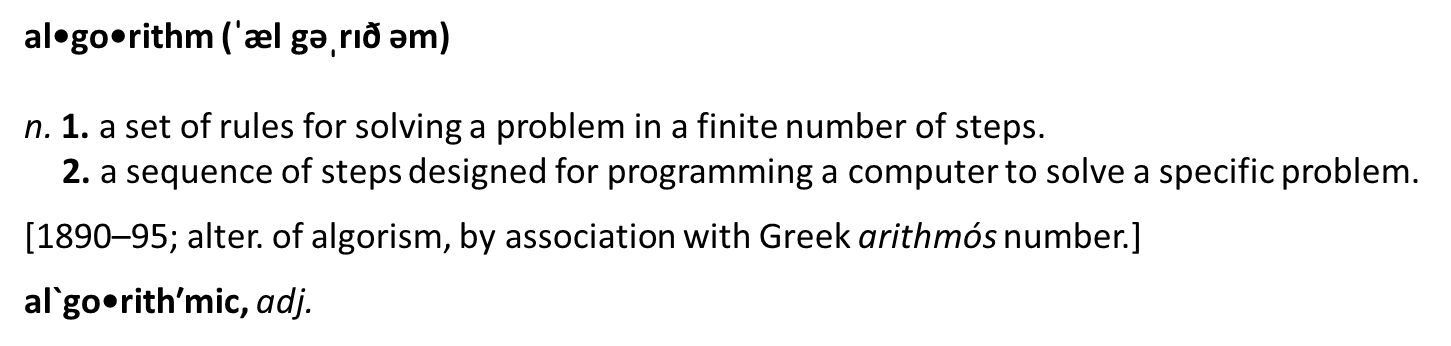

The Algorithm of Evolution

(Does nature ‘run programs’?  And, if it does, are the ‘algorithms’ any good?)

So, what is an algorithm?

Algorithm

No, not that; this is a far more fundamental question.  What IS is algorithm?  Animal?  Vegetable?  Mineral?  Ah …

OK, start with something simpler; often the first class discussion on a pure maths degree … What IS a number?  How would you answer that?  Now, if you’ve pointed at something, perhaps even pictured something, you’re wrong. Continue reading


Should We Mind the ‘Reality Gap’?

It’s generally accepted that making education ‘relevant’ is a good thing for the classroom.  Usually, this means finding practical applications for theory.  But how much of a problem is it when our ‘real world’ examples aren’t as ‘real’ as they might appear?  How important is the ‘Reality Gap’?

A universal complaint of students, whether at school, college or university, is that they often don’t see the relevance of some of the material they study.  “When am I going to be doing this in a real job?” is a typical question.  There are three broad categories of response from the teacher; bluntly and clumsily characterised as follows:

  1. “You’re getting an education that shows your capability at this level.  The content doesn’t matter.  You’ll be trained to do a particular job when you’ve got one.”
  2. “You might only use about 10% of what you’re learning now in the real world but you don’t know which 10% it’s going to be and your 10% will be different to everyone else’s 10% so we have to do all this stuff.”
  3. “Well, here’s an example of how this might be used in the real world.”

(A good teacher would add a considerable degree of finesse to these answers, of course.)  Ignoring the merits and demerits of 1 and 2 entirely, how best to achieve 3 presents some interesting challenges because, much as we might like to pretend otherwise, the real world is a terribly complicated place, in which the textbook usually only gets us so far … Continue reading


A Pardon for Alan Turing

This probably shouldn’t be allowed to pass by without comment on this site.

http://www.bbc.co.uk/news/technology-25495315

Of course, on one level, this is great news for friends, family and the Computer Science community as a whole.  It might also be seen as a small step towards righting a larger injustice (although it equally might not).  On the other hand, a pardon is really a ‘let-off’ with a slapped wrist; “naughty boy but we forgive you”.

What it certainly doesn’t do is:

  1. Accept that the prosecution should never have been brought,
  2. Accept that the law was wrong and should never have been in force, or
  3. Offer anything for the tens of thousands of others, also victimised in the same way.

It’s doubtful that any of these will ever come to pass …