‘Robot Companionship’ Survey

Would you like to help with some research into attitudes towards having robots as companions in future?

If so, there are some interesting questions to answer at https://docs.google.com/forms/d/1_FuieS3Ga3rZUuKZbgLnwtedLOADc67wpFxToOf7NHc/viewform?c=0&w=1

But please note that many of the questions are sexual in nature so the survey is only open to those over the age of 18.

The survey is completely anonymous: NO personal data is collected to identify participants


April Fools’ Day Pranks for Geeks!

Is this funny?  Or cruel?  Or imaginative?  Or annoying?  Or clever?  Or just sad?

http://www.ibtimes.co.uk/april-fools-day-2015-computer-prank-ideas-befuddle-annoy-colleagues-friends-1494444

Only you can decide!

how-make-fake-desktop

(Or is that not the way ‘ethics’ work these days?)


“The Theological Objection”

This month’s post considers a little-remembered part of Turing’s otherwise famous 1950 paper on AI.

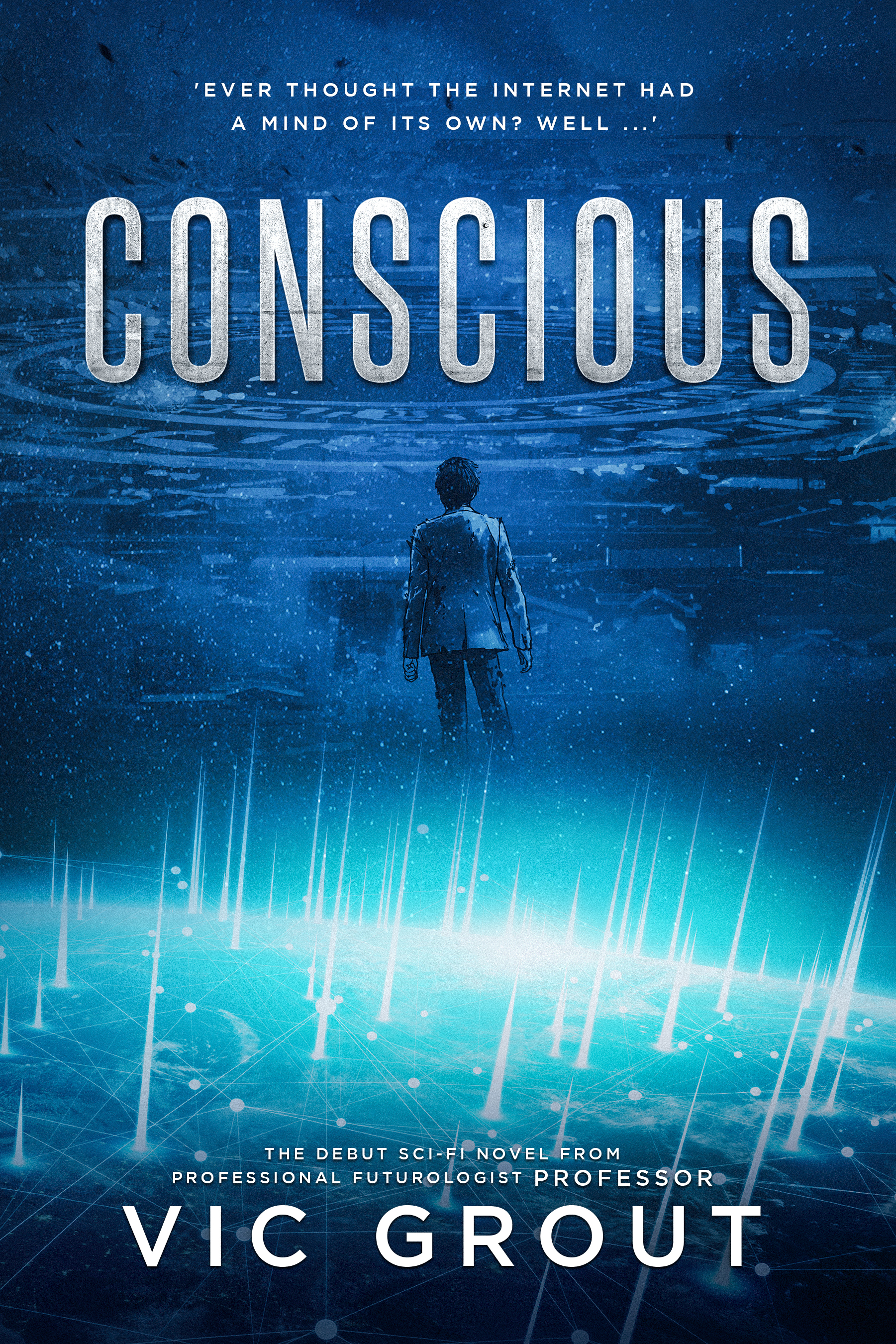
Just for once, this month, let’s not skirt around the generally problematic issue of ‘real intelligence’ compared with ‘artificial intelligence’ and ask what it means for a machine (a robot, if you like, for simplicity) to have the whole package: not just some abstract ability to calculate, process, adapt, etc. but ‘human intelligence’, ‘self-awareness’, ‘sentience’; the ‘Full Monty’, as it were.  Star Trek’s ‘Data’ if you like, assuming we’ve understood what the writers had in mind correctly.

Of course, we’re not really going to build such a robot, nor even come anything close to designing one.  We’re just going to ask whether it’s possible to create a machine with ‘consciousness’.  Even that’s fraught with difficulty, however, because we may not be able to define ‘consciousness’ to everyone’s satisfaction but let’s try the simple, optimistic version of ‘consciousness’ broadly meaning ‘a state of self-awareness like a human’.  Is that possible?

Continue reading


Known Unknowns

This month’s post may make a valid point.  Or it may not.  Or it may be impossible to tell, the concept of which itself may or may not make sense by the end of the piece!

How do we handle things we don’t know?  More precisely, how do we cope with things we know we don’t know?  All right then: how do we handle things we know we can’t know?

As is the nature of this blog, the examples we’re going to discuss are (at first, at least) taken from the fields of computer science and mathematics; but there are plenty of analogies in the other sciences.  This certainly isn’t a purely theoretical discussion.

On the whole, we like things (statements or propositions) in mathematics (say) to be right or wrong: true or false.  Some simple examples are:

  • The statement “2 > 3” is false
  • The statement “There is a value of x such that x < 4” is true
  • The proposition “There are integer values of x, y and z satisfying the equation x3 + y3 = z3” is false

OK, that’s pretty straightforward but how about this one?

  • “Every even number (greater than 2) is the sum of two prime numbers”

Continue reading