Turing Court Files on Display

Both local interest and time-critical, this one …

Historic court files revealing the details of World War Two enigma codebreaker Alan Turing’s convictions for homosexual behaviour are to go on public display for the very first time.

http://chesterpride.co.uk/turing-display/

courtfiles

The story of Alan Turing’s vital contribution to the Allied campaign during World War Two was brought to life in the film, Oscar-winning The Imitation Game. And now, the record of what followed in Cheshire’s courts is available for public viewing.

Continue reading


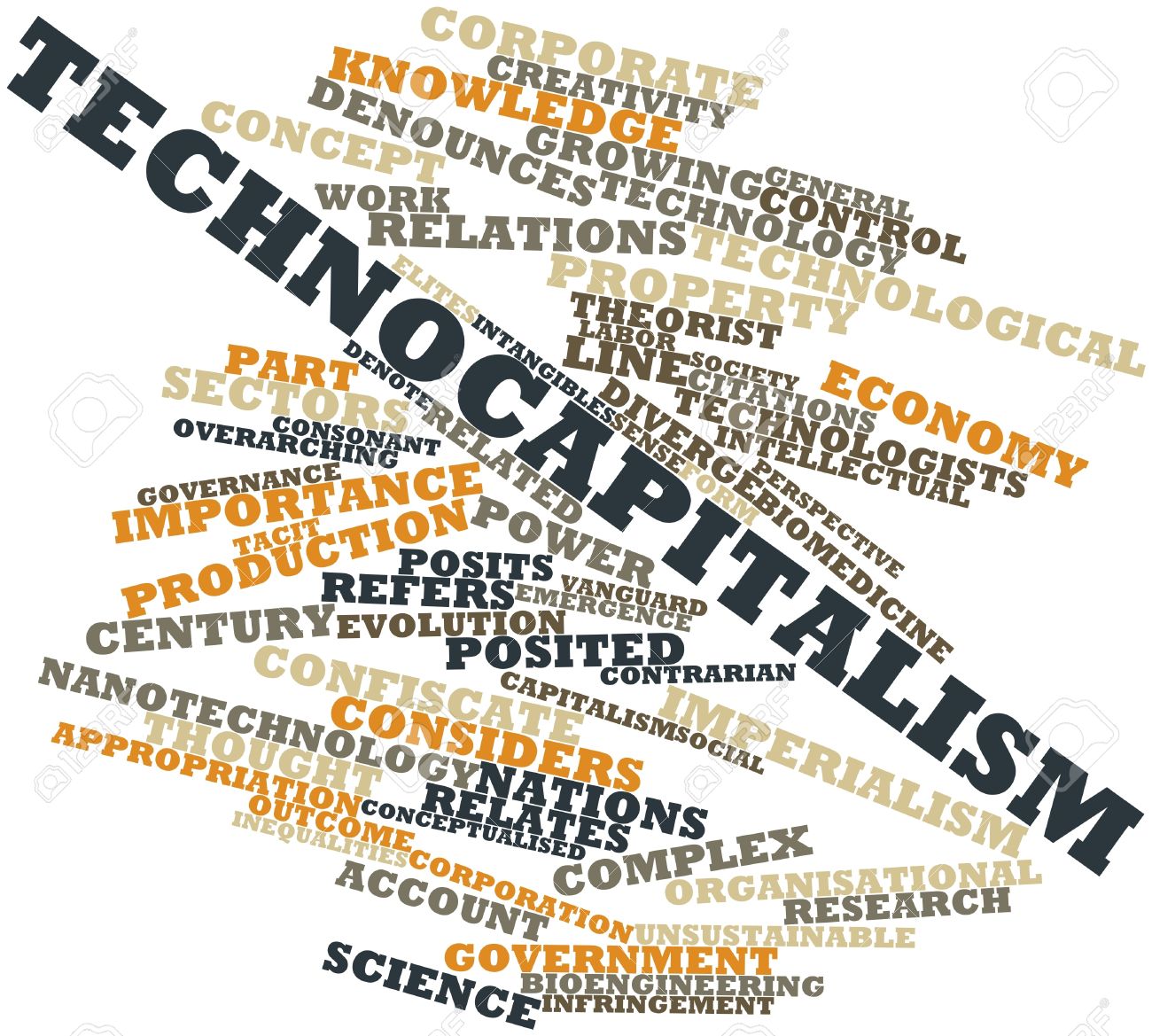
Technocapitalism

We could be well-advised to take note of this word.  We may be hearing a lot more of it …

Actually, in truth, we’ve already used it a few times before in this blog but perhaps now might be a good time to have a closer look at what it is and what it might mean?

Technocapitalism1

It’s always dodgy making claims like this but the term technocapitalism was probably effectively coined by Professor Luis Suarez-Villa in Technocapitalism: A Critical Perspective on Technological Innovation and Corporatism (2009) and developed further in Globalization and Technocapitalism: The Political Economy of Corporate Power and Technological Domination (2012).  [Yes, it may have been used before this, but it gets very hard to track these things down accurately.]

Continue reading


Mathematicians and Computer Scientists

It’s the holiday time of year: so a slightly lazy post for August.  Adapted from a letter published in this month’s edition of Mathematics Today

For anyone who’s worked in the ‘Twilight Zone’ between mathematics and computer science for any time, June’s Mathematics Today article, Urban Maths: A Roundabout Journey [on rounding issues in computer calculations], would have struck a distinct chord.  They will have often come across situations in which mathematicians and computer scientists don’t quite see eye to eye.  The following, fairly well-known, combinatorial exercise is another good example.

How many ordered ways are there of summing contributions of 1 and 2 to a given integer, n?  So, for example, 1+1+2+1+1 and 2+2+2 are two of the 13 different ways of making 6.  Call this number f(n) so that, in this example, f(6) = 13.

The standard combinatorial approach is to consider the first term.  The only two options, 1 (leaving n-1 to make) and 2 (leaving n-2) lead readily to the recurrence relation f(n) = f(n-1) + f(n-2).  Easy enough, yes, but the interesting question now is what to do with it?

Continue reading


Shadbolt Working Groups Set Up

The UK Council of Professors and Heads of Computing (CPHC) has formed four working groups in response to recommendations from the recent Shadbolt Report and is now looking for experienced members to join them

The independent review led by Professor Sir Nigel Shadbolt, published on 16th May 2016, discussed accreditation arrangements for computer science degrees to ensure that they continue to be fit for the future.  It focused on the purpose and role of accreditation and how the system can support the skills requirements of employers and improve graduate employability.

Four of the report’s ten recommendations identified particular roles for CPHC, leading to the establishment of the four working groups below …

Continue reading