About Vic Grout
Futurist. Socialist. Vegan. Doomsayer.
Ethics/Futurology Professor.
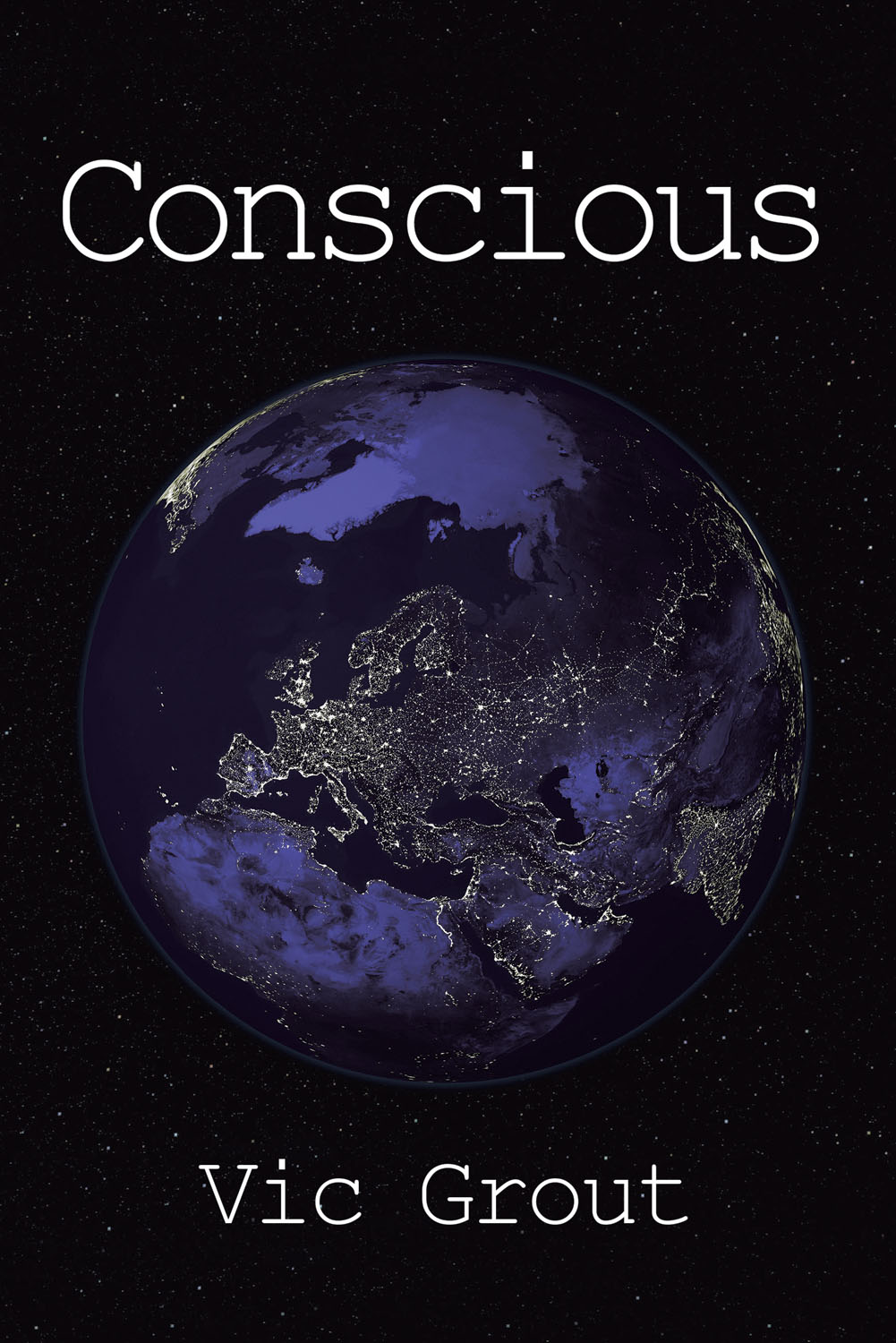
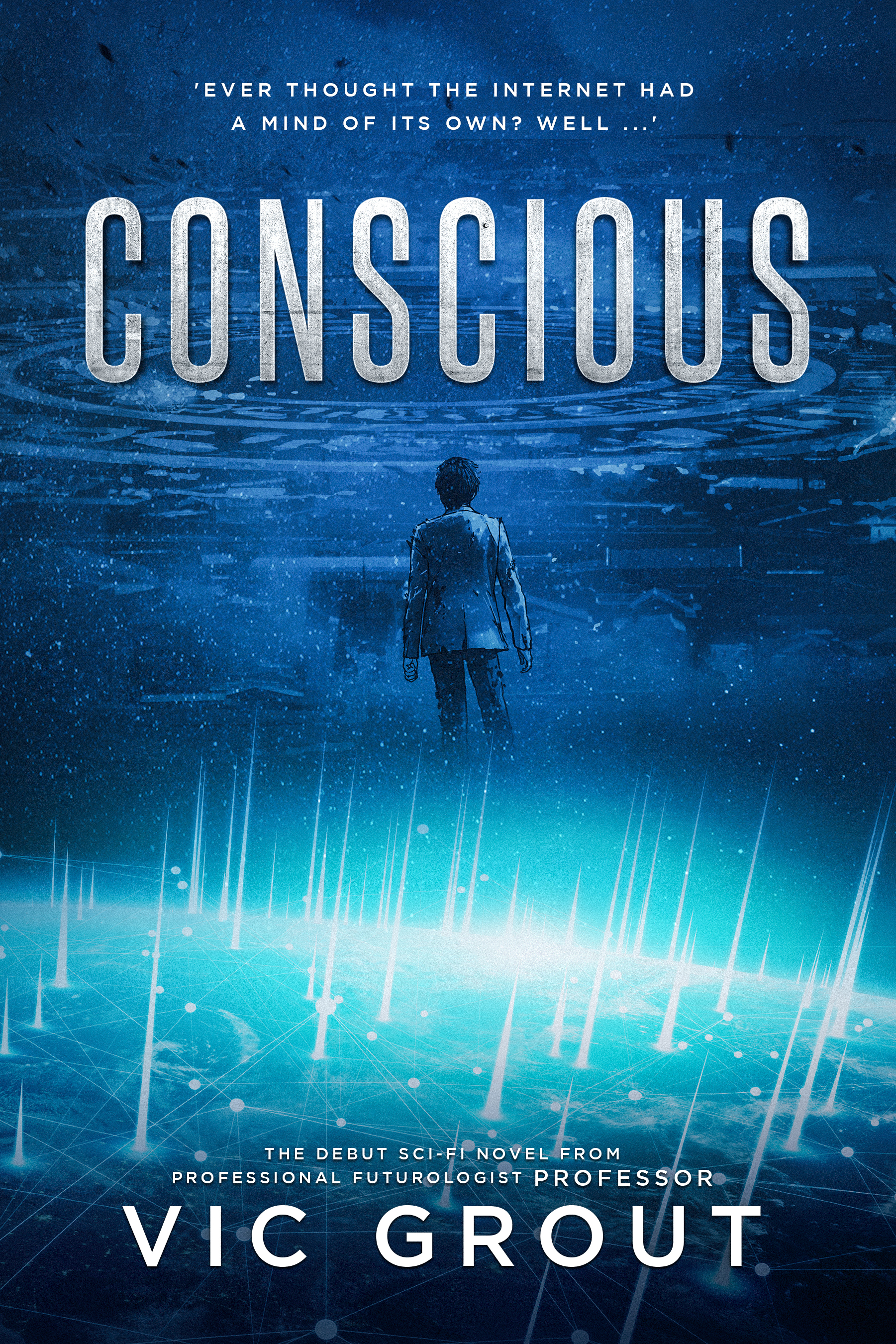
Author of 'CONSCIOUS' https://vicgrout.net/the-book/
Now available as eBook and paperback
What makes something sentient? What does it take for an entity to be aware of its own existence and to want to interact with the world of its own accord? Is it a gift from God or hard science? Is it something fundamentally human or animal in nature or is it a simple technological principle based on brain size? There are many models, of course. But, if consciousness is simply a natural product of neural complexity then eventually, in theory, we might build something – a computer or a machine – that was actually big enough to wake up!
Oh, wait …!
The widespread ramblings, which have appeared on this blog over the years, now make a partial contribution to a novel. (See http://www.lulu.com/spotlight/vicgrout)

Vic Grout’s Conscious is set a year or three into the future. The ‘Internet of Everything’ is making the world a more connected place than ever before. People’s lives are becoming increasingly automated. But something odd is happening … ‘Things’ are beginning to misbehave and no-one can work out why. What starts as an amusing inconvenience quickly becomes very serious indeed!
A ragged bunch of academics, scientists and philosophers are on the case – and may know the answer. But now they have to convince people that their crazy explanation is true. And that’s only the start. Against a backdrop of a world suddenly beginning to fall apart, they’re in a race against time to get someone to do anything about it. And not everyone is on their side!
Continue reading
Leave a comment | tags: Artificial intelligence, Big Connectivity, Big Data, Brain, Formal proof, Futurology, Internet of Everything, Internet of Things, IoT, Machine intelligence, Real Internet of Things, Science fiction, Singularity, Technological singularity | posted in Academia, Algorithms, Computer Science, Computing, Education, Engineering, General, Hardware, Industry, Mathematics, Philosophy, Politics, Programming, Science, Software
What makes something sentient? What does it take for an entity to be aware of its own existence and to want to interact with the world of its own accord? Is it a gift from God or hard science? Is it something fundamentally human or animal in nature or is it a simple technological principle based on brain size? There are many models, of course. But, if consciousness is simply a natural product of neural complexity then eventually, in theory, we might build something – a computer or a machine – that was actually big enough to wake up!
Oh, wait …!
The widespread ramblings, which have appeared on this blog over the years, now make a partial contribution to a novel: http://tinyurl.com/VicGroutConscious
Vic Grout’s Conscious is set a year or three into the future. The ‘Internet of Everything’ is making the world a more connected place than ever before. People’s lives are becoming increasingly automated. But something odd is happening … ‘Things’ are beginning to misbehave and no-one can work out why. What starts as an amusing inconvenience quickly becomes very serious indeed!
A ragged bunch of academics, scientists and philosophers are on the case – and may know the answer. But now they have to convince people that their crazy explanation is true. And that’s only the start. Against a backdrop of a world suddenly beginning to fall apart, they’re in a race against time to get someone to do anything about it. And not everyone is on their side!
Continue reading
Leave a comment | tags: AI, Artificial intelligence, Big Connectivity, Big Data, Brain, Consciousness, Emerging technologies, Internet of Everything, Internet of Things, Real Internet of Things, Science fiction, Sentience, Technological singularity | posted in Academia, Algorithms, Computer Science, Computing, Education, Engineering, General, Hardware, Industry, Mathematics, Philosophy, Politics, Programming, Science, Software
Both local interest and time-critical, this one …
Historic court files revealing the details of World War Two enigma codebreaker Alan Turing’s convictions for homosexual behaviour are to go on public display for the very first time.
http://chesterpride.co.uk/turing-display/

The story of Alan Turing’s vital contribution to the Allied campaign during World War Two was brought to life in the film, Oscar-winning The Imitation Game. And now, the record of what followed in Cheshire’s courts is available for public viewing.
Continue reading
Leave a comment | tags: Alan Turing, Legal, Prosecution | posted in Politics
We could be well-advised to take note of this word. We may be hearing a lot more of it …
Actually, in truth, we’ve already used it a few times before in this blog but perhaps now might be a good time to have a closer look at what it is and what it might mean?
It’s always dodgy making claims like this but the term technocapitalism was probably effectively coined by Professor Luis Suarez-Villa in Technocapitalism: A Critical Perspective on Technological Innovation and Corporatism (2009) and developed further in Globalization and Technocapitalism: The Political Economy of Corporate Power and Technological Domination (2012). [Yes, it may have been used before this, but it gets very hard to track these things down accurately.]
Continue reading
8 Comments | tags: Automation, Capitalism, Creativity, Emerging technologies, Technology corporations, Wealth distribution | posted in Industry, Politics